Have you ever shipped a lightweight item—like a decorative pillow or a framed poster—in a large box and been absolutely shocked by the price at the register? You were likely charged based on a pricing model called "Dimensional Weight" (often abbreviated as DIM weight). Understanding how this works is the single most important secret to saving money on shipping.
This article is part of our Ultimate Guide to Shipping & Packing.
Key Takeaways
- Carriers charge based on the size of the box, not just the physical weight.
- You are billed for whichever is greater: actual weight or dimensional weight.
- Reusing oversized Amazon boxes is the most common reason people overpay for shipping.
- PostalAnnex stocks over 50 box sizes to ensure you get the perfect fit and lowest price.
Quick Navigation
1. What is Dimensional Weight?
Think about the space inside a UPS or FedEx delivery truck. That space is limited. If you ship a 1-pound pillow in a massive 24x24x24 box, that box takes up space that could have held a 50-pound box of automotive parts.
To account for the lost space, shipping carriers implemented dimensional weight pricing. Essentially, they assign a theoretical weight to a box based on its physical dimensions. When you ship a package, the carrier compares the actual weight on the scale to the calculated dimensional weight. You are charged for whichever number is higher.
2. How is it Calculated?
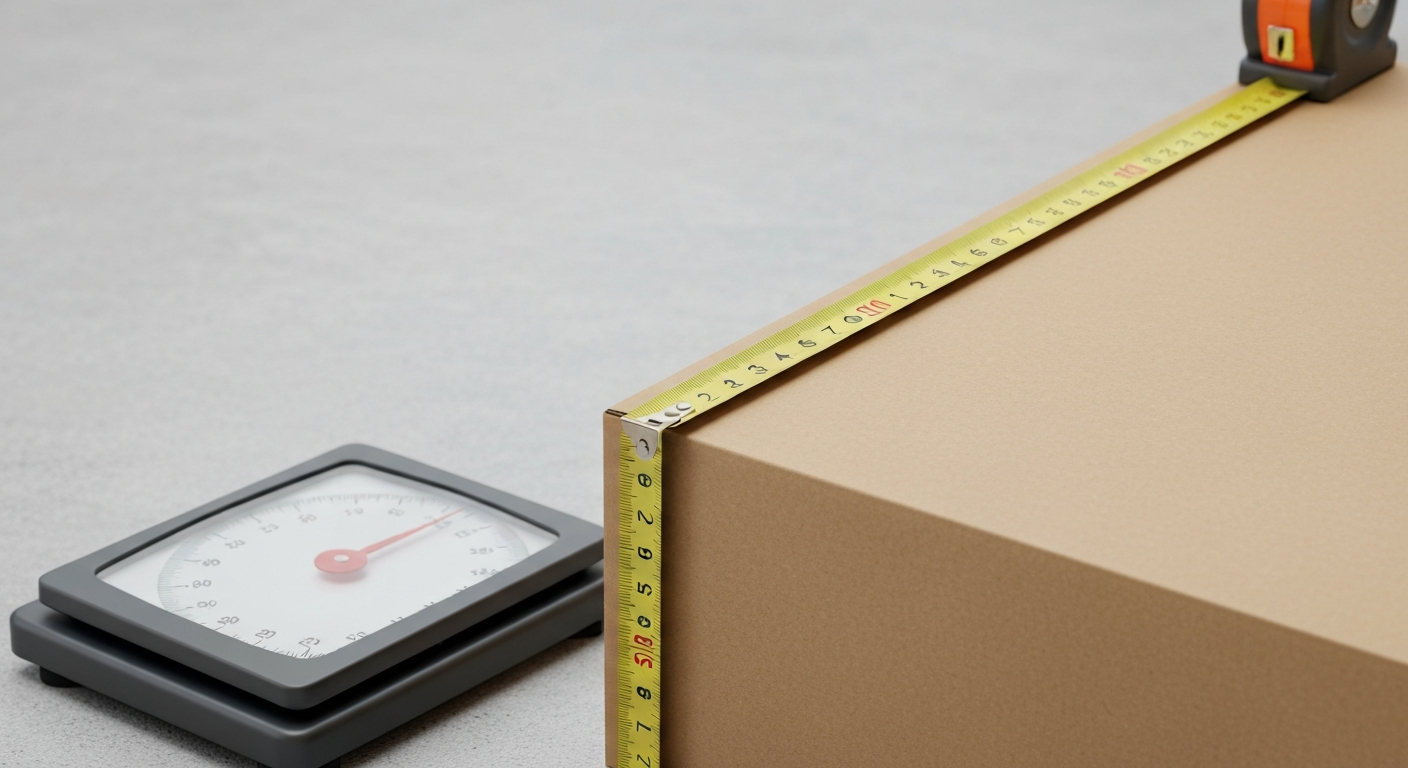
The formula is straightforward: (Length x Width x Height) / DIM Divisor.
The "DIM Divisor" is a number set by the carriers (like 139 for UPS and FedEx retail rates). For example, if you have a box that is 12" x 12" x 12", the volume is 1,728 cubic inches. Divide that by 139, and you get 12.4. The carrier rounds up, so the dimensional weight is 13 lbs.
If the item inside that box only weighs 2 lbs on the scale, you are still going to be charged as if it weighs 13 lbs!
💡 Money Saving Tip
Never reuse an oversized box just because it's free. The extra $15 you pay in dimensional weight charges is far more expensive than simply buying the correct $3 box.
3. How to Avoid DIM Weight Charges
The easiest way to avoid overpaying is to use the smallest box possible that still allows for the required 2 inches of protective padding around your fragile items.
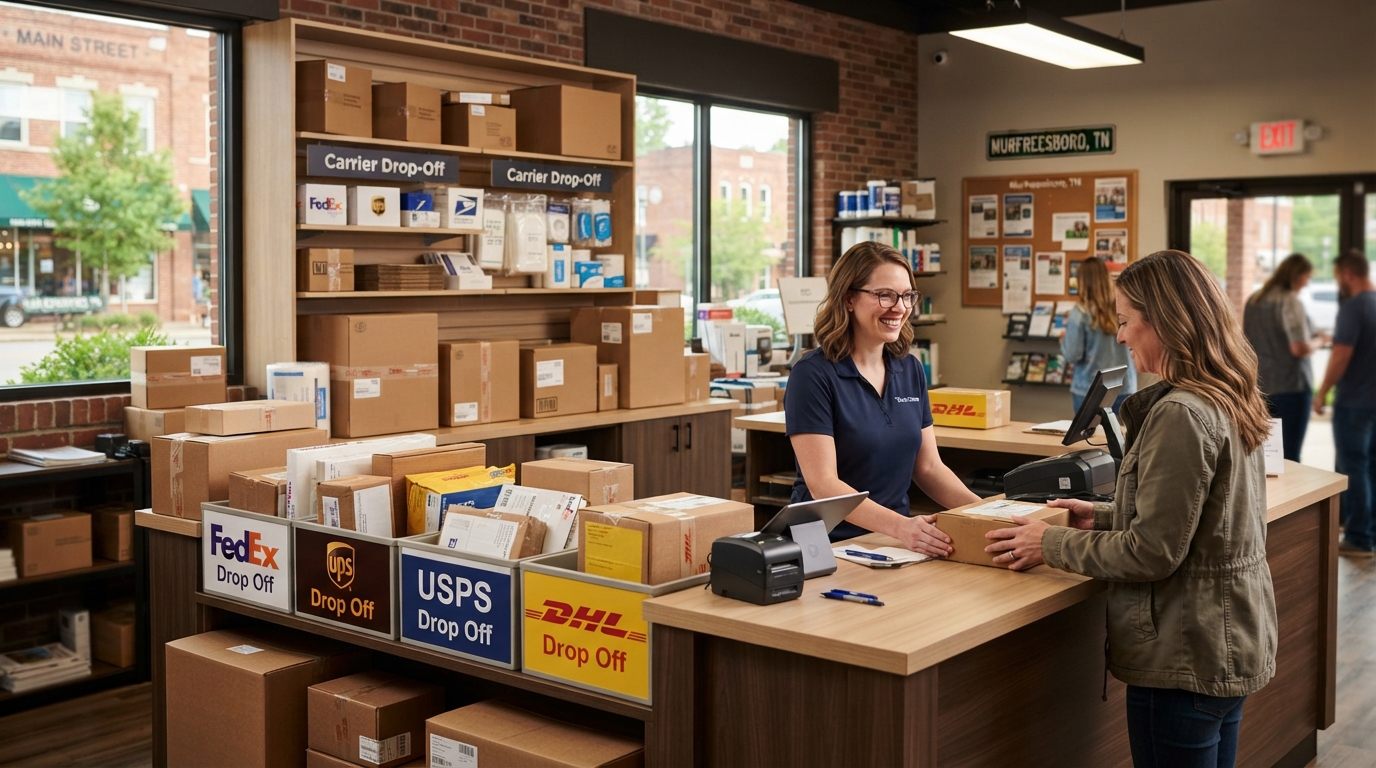
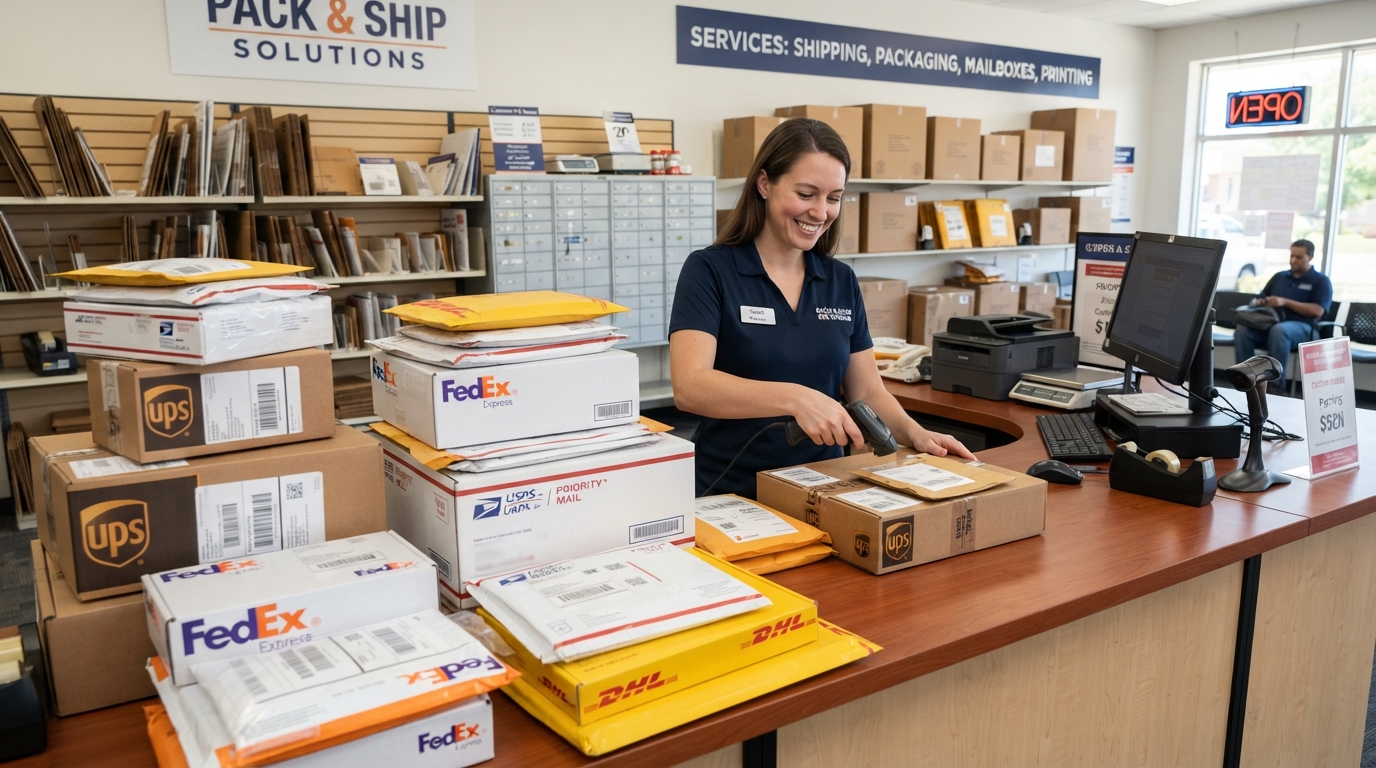
At PostalAnnex in Murfreesboro, we help our customers beat dimensional weight every day. We stock over 50 different box sizes. If we don't have the exact size you need, our packing experts will physically cut down a larger box to fit your item perfectly. This custom-sizing eliminates empty air and ensures you never pay more for shipping than you absolutely have to.
Stop Overpaying for Shipping
Bring your items to PostalAnnex and let our experts pack them in the perfect-sized box.
Contact Us Today